SecureYrHome Editorial
In this article6 sections
Key takeaways
- Rekeying changes which key operates a lock without replacing the lock itself.
- Reset garage openers, keypad codes, smart lock users and alarm codes the same week.
- Renters and condo owners should check leases or association rules before changing locks.
Picture the life of the keys to your new house before you got them. The previous owners had a set, and so did their kids. A dog walker may have had one. So might a cleaner, a contractor from the kitchen remodel, a neighbor who watered plants, and whoever managed the listing lockbox. Some of those keys were surely returned. You have no way of knowing whether all of them were.
That uncertainty is the whole case for rekeying. It is usually a modest job next to everything else on a moving checklist, and when it is done, the only working keys are the ones you hand out yourself.
Rekeying versus replacing the locks
People often use the two terms interchangeably, but they are different jobs.
Rekeying keeps the existing lock on the door and changes the small parts inside the cylinder so the old keys stop working and a new key does. The hardware, finish and deadbolt stay the same. If your locks are in good shape and you like how they look, rekeying is usually the simpler choice.
Replacing means taking the lock off the door and installing a new one. That makes sense when:
- The lock is worn, sticky or damaged.
- You want a sturdier deadbolt or a different style.
- You want to switch to a keypad or smart lock.
- The existing locks are a mix of makes that cannot share one key.
Either way, the goal is the same: old keys stop working.
While you are looking at the locks, look at the doors around them too. A solid deadbolt does less if the strike plate is held on by short screws in soft trim. Longer screws that reach the framing behind the jamb are a common, simple upgrade that a locksmith or handy homeowner can add during the same visit.
How rekeying works
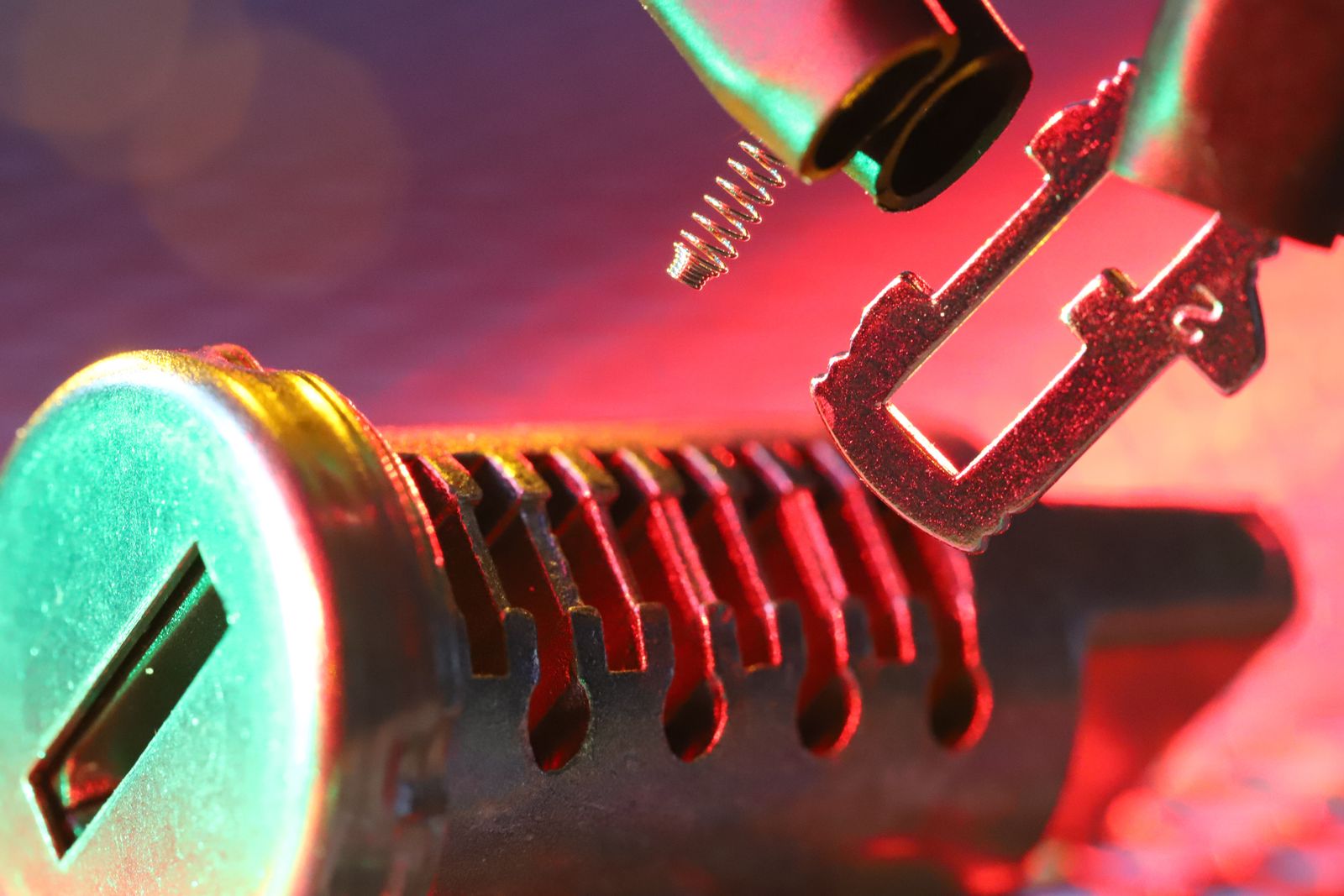
Most residential locks are pin tumbler locks. Inside the cylinder sit small stacks of pins in varying lengths. The right key pushes each stack to exactly the height where the cylinder can turn. Change the pins, and a different key becomes the right one.
A locksmith typically removes the cylinder, takes out the old pins, and loads new ones matched to a new key. The job is usually done at the door, and several locks can often be set to work with a single key, which is called keying alike. One key for the front door, back door and garage entry is a real convenience.
Some lock makers sell rekeying kits for their own products, and some locks are designed so the owner can rekey them with a special tool. These can work well for a handy homeowner, though they only fit certain locks and the tiny parts are easy to lose. If you are not sure what you have, a locksmith can tell you quickly.
Before the appointment, gather every key the sellers left behind, count the exterior locks (including the door between the garage and the house), and decide how many new keys you actually need. It is easy to order extras and then lose track of them, which quietly recreates the problem you set out to fix.
When hiring a locksmith, keep in mind that licensing requirements vary by state, and some states do not license locksmiths at all. Ask for identification, a business name and a written estimate before work starts.
The other ways into your house
Physical keys are only part of it. A modern home often has several other ways in, and each deserves attention in the same week:
- Garage door openers: remotes and exterior keypads can let anyone who has one into the garage, and often from there into the house. Clear the opener's memory of old remotes, reprogram the ones you keep, and change the keypad code. The steps are usually in the opener's manual.
- Keypads and smart locks: delete every existing user code and set new ones. If the lock connects to an app, reset it to factory settings and set it up under your own account so the previous owner no longer has access.
- Alarm systems and cameras: if the home came with a security system, contact the monitoring provider or installer to change the master code and user codes and to transfer or close the old account. Remove previous owners from any connected apps.
- Mailboxes, gates and sheds: cluster mailbox keys usually come from the post office or a property manager, and padlocks on gates and sheds are easy to overlook and simple to swap.
It is tempting to leave these for later because they feel like settings rather than security. In practice, a garage remote left in a former owner's car can open the house just as easily as a key.
It is also worth a slow walk around the outside of the house looking for hidden spares the previous owners may have left: under planters, above door frames, inside a fake rock or taped inside a meter box. After rekeying, those keys will not work, but removing them avoids confusion later and keeps anyone from assuming your house has a key outside.
A move-in week checklist
Work through this list during your first week, while the boxes are still stacked:
- Rekey or replace every exterior door lock, including the door from the garage into the house.
- Decide if all exterior locks should be keyed alike.
- Reprogram garage door remotes and change the keypad code.
- Delete old codes and users from keypads and smart locks.
- Change alarm codes and confirm who holds the monitoring account.
- Swap padlocks on gates, sheds and crawlspace doors.
- Check sliding doors and windows for working latches.
- Make a short list of who has a new key, and keep it somewhere safe.
If you find a door that sticks or a latch that does not catch, add it to the list for a handyman or locksmith. A lock only helps when the door closes fully.
Renters, condos and shared entries
If you rent, read your lease before touching the locks. Many leases require landlord permission for lock changes and a copy of the new key for the landlord. State and local landlord-tenant laws vary on whether a landlord must rekey between tenants and how tenant requests are handled, so start with your landlord or property manager.
In condos and townhomes, the association may control building entrances, shared doors, mail rooms and sometimes the unit's main entry hardware. Check the rules before changing anything outside your own door, and ask the management office how building fobs or entry codes from the previous owner are handled.
Settling in
Rekeying is not glamorous, but it is one of the few moving tasks that directly limits who can walk into your home. Once it is done, you can turn to lighting, cameras and daily routines at your own pace. SecureYrHome's homeowner guides cover those next steps in plain language, one topic at a time.
This article is general information, not professional or legal advice. Camera, recording, permit and alarm rules vary by state and city. In an emergency, call 911.