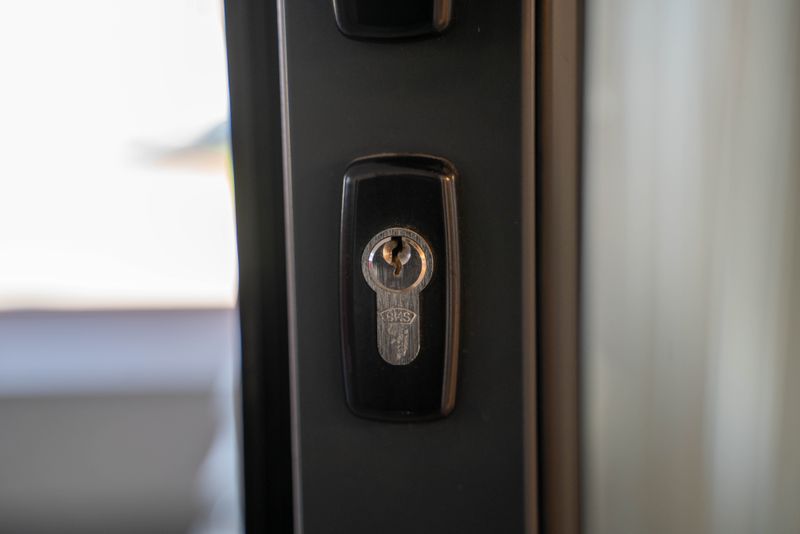
What a Home Security Assessment Actually Covers
A home security assessment should look at far more than a sales package. Here's what a thorough walk-through covers, from the curb and doors to lighting, habits and local rules.
5 min read
Getting Help
A good installer explains options plainly, puts terms in writing and doesn't rush you. This guide covers what to check before you sign: licensing rules that vary by state, contract and monitoring terms, equipment ownership, and the questions worth asking.
Choosing someone to put sensors on your doors and a panel on your wall is a trust decision. They'll learn how your house is laid out, where the controls are and, often, your codes. The system you end up with also depends a lot on the person who designs it, not just the equipment.
Rather than hunting for a single right answer, it helps to compare a few companies on the same points: who they are, what they propose, what you're agreeing to pay for and for how long, and what happens if you want to change course. The steps below walk through each one, with questions to bring to every quote.
1Step 1 of 8
Before calling anyone, spend a few minutes on what matters to you. Maybe you want the doors and first-floor windows covered, a camera at the driveway, smoke and water sensors, or simple notifications on your phone. Maybe you'd rather monitor it yourself, or you want a professional monitoring center to contact help when something trips. Write down your priorities, a rough budget and any rules from your homeowners association or landlord. With that list in hand, you can compare quotes on your own terms instead of starting from whatever package a salesperson brings.
Self-monitoring sends notifications to you. Professional monitoring adds a center that can contact responders. Each suits different households and budgets.
Consider who will use the system every day, including kids, older relatives and pets, so the design fits your real routines.
2Step 2 of 8
Security installers are licensed differently depending on where you live. In some states, both the alarm company and each technician need a state license. Elsewhere, cities or counties set the rules, and a few places ask for very little. Ask each company which licenses apply in your area, then confirm the numbers with the state or local licensing office. Ask for proof of liability insurance and, where required, workers' compensation coverage. Also ask whether your city or county requires an alarm permit or registration, and who handles that paperwork. Rules and fees for false alarms differ from one town to the next, so learn them up front.
A license number on a business card is a start. Look it up with the issuing agency to confirm it's current and matches the company name.
Some states require background checks for alarm technicians. Even where they don't, it's fair to ask how the company screens the people it sends into homes.
Many local governments want monitored alarms registered. Find out who files the paperwork, what it costs, and what happens after repeated false alarms.
3Step 3 of 8
Ask two or three companies to visit, look at the house and propose a system in writing. A careful installer walks the property, asks how you use the home and explains why each device goes where it does. Be wary of quotes given over the phone without a visit, or offers that only hold if you sign today. Ask each company to list equipment by type and quantity, the installation cost, any monthly fees, and what's included for service and repairs. Matching line items make it much easier to compare what you're actually getting.
A reputable company will leave a written quote and give you time to think. A deal that expires tonight is a reason to slow down, not speed up.
Ask why a sensor or camera goes in a given spot. Clear reasons show the design was made for your house, not copied from a template.
4Step 4 of 8
Monitoring agreements can run for several years, and the details matter more than the monthly figure. Read the length of the term, whether it renews automatically, how much notice you need to give to cancel, and what you'd owe if you end it early. Check whether the price can rise during the term. Find out what happens if you move: some contracts transfer to a new address or to a buyer, and others don't. If a salesperson makes a promise that isn't in the written agreement, ask for it to be added before you sign.
Look for the renewal clause and the notice period. Put the cancellation deadline on your calendar the same day you sign.
Ask for the early termination amount in writing, with a worked example, so there's no surprise if your plans change.
Ask how the contract handles a move or a home sale before you commit, rather than after the house is already listed.
5Step 5 of 8
Some systems are sold outright, and the equipment is yours from day one. Others are leased or bundled into the monitoring agreement, which can mean the company owns the panel and sensors until the contract ends. Ask which arrangement applies, how long the warranty lasts and what it includes, and whether the equipment is locked to one monitoring provider. Proprietary equipment can limit your choices later if you want to switch companies or monitor the system yourself. Also ask who holds the master code and whether you'll receive it at the end of installation.
The master or installer code controls the system's settings. Ask whether you'll receive it, or how settings get changed if you ever leave the company.
Get the warranty terms in writing, including who pays for a service call and how soon the company typically sends someone out.
6Step 6 of 8
A short conversation tells you a lot about how a company works. Ask how long they've served your area, who will actually do the installation, and whether that person is an employee or a subcontractor. Ask where the monitoring center is, whether the company runs it or uses a third party, and what happens when a sensor trips: who calls you, in what order, and how responders get involved. Ask for local references you can call. Pay attention to how they answer, not only to what they say. Clear, patient answers are a good sign.
Ask about the call order when a sensor trips and how the company confirms a real intrusion before contacting police, since some local rules require that step.
Online reviews help, but read the complaints and how the company replied. A pattern of billing or cancellation disputes is worth raising directly.
7Step 7 of 8
Security companies sometimes sell door to door or by phone, especially where many people have recently moved in. You don't have to decide on the spot. Ask for a business card, a license number and a written offer, then look the company up yourself before calling back. Plenty of towns make salespeople who knock on doors register or get a permit first, and a reputable company honors a 'no soliciting' sign. Be careful with anyone who says they're from your current alarm company and needs to replace your equipment. Call your provider at the number on your bill to check. For unwanted sales calls, you can register your number with the National Do Not Call Registry; companies are expected to follow telemarketing and consent rules.
Look up the company and its license yourself instead of relying on details the salesperson hands you. Call back later if you're still interested.
Federal rules and many state laws let buyers back out of certain sales made at home within a short period. Ask where the written cancellation notice is.
8Step 8 of 8
Before the technician leaves, ask for a full walk-through. You should know how to arm and disarm the system, add and delete user codes, cancel a false alarm with the monitoring center, and confirm that each sensor reports correctly. Ask for manuals, your account and permit numbers, and the company's service phone line. Run a test together with the monitoring center, with your account in test mode. Then look over the work itself: tidy wiring, patched holes, and cameras aimed at your own property rather than into a neighbor's yard.
Store the contract, warranty, permit and passwords in one place, so you can find them quickly when something needs service or you move.
Tick boxes as you go. Nothing leaves this page.
It depends on where you live. Some states license alarm companies and technicians directly, while others hand that job to local governments or require little at all. Ask each company which licenses they hold for your area, then verify them yourself with the issuing agency. It's also reasonable to ask about insurance and how technicians are screened before they work in homes.
Not by itself. Multi-year terms are common, sometimes in exchange for lower upfront equipment costs. What matters is that you understand the terms: the length, automatic renewal, cancellation notice, early termination costs, price changes, and what happens if you move. If any of that is vague or missing from the written agreement, ask for it in writing before you sign.
Sometimes. It depends on your contract and on whether the equipment is proprietary or locked to one provider. Owned, open equipment is usually easier to move to a new company or to self-monitoring. Leased or locked equipment may need replacing. Ask about this before you sign, and ask for the master code so settings can be changed later.
Don't let them in or sign anything on the spot. Ask for identification and a card, then call your alarm company using the number on your bill or contract, not one the visitor gives you. A real service visit will be on record. If someone refuses to leave or you feel unsafe, close the door and call 911.
The right installer for your home is the one whose plan, paperwork and answers all line up. Take your time, compare written quotes on the same terms, and don't sign until the contract matches what you were told in person. This page comes from the set of homeowner guides SecureYrHome publishes for general information, and the company doesn't sell, install or monitor systems. Treat these steps as a starting point, and check the licensing and permit rules that apply where you live.
 Doors & Entry PointsHome Security BasicsGood home security starts with the doors, windows and habits you already have.Read the guide
 Doors & Entry PointsDoor Locks & Smart LocksA deadbolt can only hold as well as the door, frame and screws around it.Read the guide
 Doors & Entry PointsPackage DeliveriesMost package problems come down to timing and placement: a box sits in plain view for hours, or arrives when nobody's around.Read the guide
A home security assessment should look at far more than a sales package. Here's what a thorough walk-through covers, from the curb and doors to lighting, habits and local rules.
5 min readWired and wireless security systems each fit different homes. Learn how they differ, where each makes sense, when a hybrid setup is practical and what to ask before choosing.
5 min readProfessional monitoring puts a trained operator between a sensor and a response. Self-monitoring puts that decision on you. Here's how each works, who each suits and what to ask.
5 min read
Property and homeowner records, list building, routes and outreach tools for security dealers, locksmiths, installers and contractors.