Outdoor lighting that makes a home harder to target
Well-placed outdoor lights help you find your way in, let neighbors notice activity, and take away the dark corners someone might prefer. This guide covers motion lights, timers, glare and how to light your property without shining into the house next door.
Lighting is one of the simplest security upgrades, and it pays off in everyday ways too. You don't fumble for keys on a dark step, guests find the right door, and you can see who is on the porch before you open up. From a security point of view, light removes cover. A doorway or side yard that sits in deep shadow is a more comfortable place for someone who doesn't want to be seen.
More light isn't automatically better, though. Harsh, glaring fixtures can create blinding bright spots next to deep shadows, annoy neighbors and wash out camera footage. The goal is steady, even light where people walk and enter, plus motion lighting for the spots that can stay dark until someone shows up.
1Step 1 of 7
Map the dark spots first
After sunset, turn on the lights you normally use and walk around the house. Note every door, gate, path, window and parking area, and ask whether you could see a person standing there from inside the house or from the street. Pay attention to side yards, the space behind a garage and corners where two walls meet, since those often sit beyond the reach of porch lights. Also note where existing lights create glare that makes it harder, not easier, to see. A quick sketch of the house with the dark areas shaded makes the next steps simple.
Look out from inside
Turn off the room lights and look out your windows at night. If you can't make out a door or path from inside, that spot may need light.
Note power sources
Mark where outlets, junction boxes and existing fixtures sit. It helps you decide whether a spot calls for hardwired, plug-in or solar lighting.
2Step 2 of 7
Light every entry door
Every exterior door deserves a working light, including the back door, the side door into the garage and any basement walkout. Light the lock and the face of the person standing there, not just the doorframe. At a front door, a fixture on each side or one mounted above reduces shadows on faces, which also helps a doorbell camera. Choose fixtures with shielded or frosted bulbs so they glow instead of glare. If a door gets regular use after dark, a fixture that stays on at a low level all evening is often more useful than one that only reacts to motion.
Keep bulbs working
A burned-out porch light can go unnoticed for weeks. Long-life LED bulbs and a quick look at dusk once a month keep your entries lit.
Add dusk-to-dawn sensors
A photocell turns the light on when it gets dark and off at sunrise, so nobody in the house has to remember a switch.
3Step 3 of 7
Use motion lights where people shouldn't linger
Motion-activated lights suit spots that don't need steady light, such as side yards, the back of a garage, trash areas and the path to a shed. A light that suddenly switches on draws attention to movement, lets you see what's going on, and saves energy the rest of the night. Adjust the sensor so it covers the area you care about without firing for every car on the street. Most fixtures let you set how far the sensor reaches and how long the light stays on after the last movement.
Aim the sensor carefully
Point the detector at the approach path, not the street or a neighbor's yard, to cut down on false triggers and constant switching.
Set a sensible on-time
A few minutes of light after motion stops is usually enough. Very long settings waste energy, and very short ones leave you in the dark halfway through a task.
Pair lights with cameras
Motion lights can improve night footage from security cameras, but check the angle so the light doesn't shine straight into the lens.
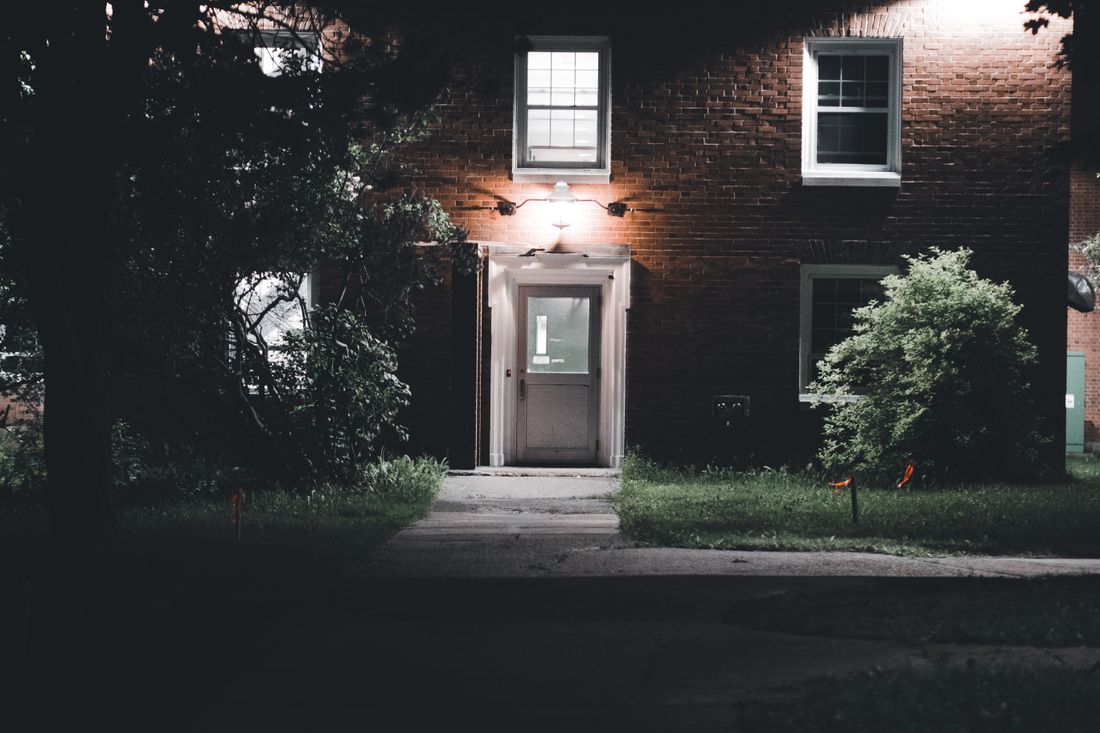
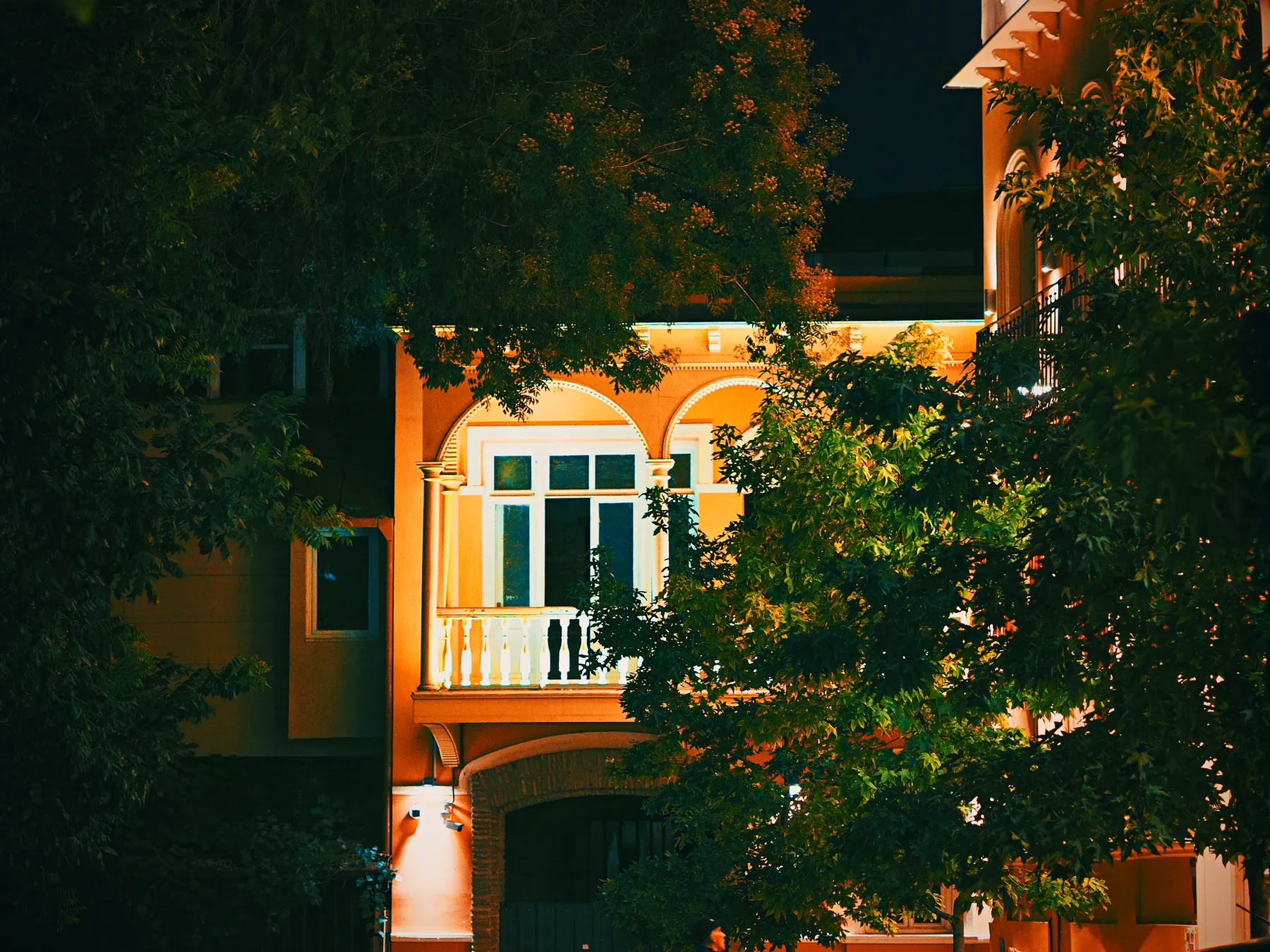
A warmly lit brick house entrance
4Step 4 of 7
Put timers and smart controls to work
Timers and smart switches take the guesswork out of outdoor lighting. A simple mechanical or digital timer can turn porch and path lights on at dusk and off at bedtime. Astronomic timers and smart switches adjust automatically as sunset shifts through the year. Indoors, timers on a few lamps in different rooms create a lived-in pattern while you travel, especially if the times vary a little from day to day. Smart plugs and switches add phone control and schedules, but they are connected devices, so secure the app account and keep the firmware current.
Vary the schedule
Lights that snap on and off at the exact same minute every day can look automated. Many smart schedules include a random or away mode for this.
Plan for outages
After a power outage, some timers lose their settings. Check them after storms, or choose models with a battery backup that holds the schedule.
5Step 5 of 7
Cut glare and keep light where it belongs
Glare works against good security lighting. A bare, bright bulb pointed outward can blind you, a passing driver and a camera all at once, while the area behind it falls into deeper shadow. Choose fixtures that shield the bulb and send light down onto the ground, steps and door. Several moderate lights spread around the property usually work better than one blazing floodlight on a corner. Warm or neutral color temperatures tend to feel more comfortable than very cool, blue-white light, and they are easier on your eyes when you step outside at night.
Choose shielded fixtures
Fully shielded or downward-facing fixtures keep light on your property and reduce the harsh contrast that hides people in nearby shadows.
Mount and aim with care
Angle floodlights down rather than out, and avoid mounting them so low that they shine into the eyes of anyone walking toward the house.
6Step 6 of 7
Be a good neighbor with your lights
Light that spills into a neighbor's bedroom window or floods their patio all night can cause real friction, and in some places it may break local rules. Many cities, counties and homeowners associations have lighting ordinances covering brightness, shielding or light trespass onto other properties, and the details vary widely. Before installing bright fixtures near a property line, check your local rules and look at the view from your neighbor's side. A friendly conversation helps too. Neighbors often appreciate a well-lit shared path, and they may point out a problem you'd never notice from your own yard.
Check local ordinances
Some areas have dark-sky or light trespass rules. Your city or county planning office, or your HOA, can tell you what applies to your home.
Adjust after feedback
If a neighbor mentions glare, try re-aiming the fixture, adding a shield, lowering the brightness or shortening the timer before anything else.
7Step 7 of 7
Choose power: hardwired, plug-in or solar
Hardwired fixtures are the most dependable choice for doors and main paths, and adding new circuits or junction boxes is electrical work that may need a licensed electrician and a permit, depending on your city. Plug-in fixtures and low-voltage path lights are easier to add yourself where an outdoor outlet exists. Solar lights suit paths and spots far from power, though they can dim after cloudy days and in winter. Mixing all three is common. Put the steadiest power at the doors and use solar or low-voltage lighting to fill in the gaps.
Use outdoor-rated gear
Fixtures, bulbs, cords and outlets used outside should be rated for wet or damp locations, and outdoor outlets should have GFCI protection.
Check solar placement
Solar panels need direct sun for much of the day. A light tucked under an eave or in heavy shade may not charge enough to last the night.
Checklist for adding a light
Tick boxes as you go. Nothing leaves this page.
0 of 8
Questions and answers
It depends on the spot. Steady, moderate light at entry doors and along main paths makes sense for many homes, especially with dusk-to-dawn sensors. Side yards and backyards are often better served by motion lights, which stay dark until something moves and draw attention when they switch on. Mixing the two approaches also keeps energy use and glare down.
No. Very bright, unshielded lights can create glare that makes it harder to see, throw deep shadows beside the lit area and wash out camera images. They can also bother neighbors and may conflict with local ordinances. Aim for even, moderate light that shows faces and walkways clearly, and use shielded fixtures that point down.
They can help in spots far from an outlet, like a back fence line or a garden path, but their output varies with sunlight, weather and the season. For doors and main entries, hardwired or plug-in lights are more dependable. If you use solar, put the panel in full sun and check the lights after cloudy stretches to make sure they still come on.
Put timers or smart schedules on a few indoor lamps in different rooms, with times that shift slightly each day, and keep outdoor entry lights on dusk-to-dawn sensors. Avoid leaving a single light burning around the clock, which can look unattended. Pair lighting with other habits, like holding the mail and asking a neighbor to keep an eye on things.
Outdoor lighting works quietly in the background once it's set up. Light the doors, add motion lights to the dark corners, run it all on timers or sensors, and keep glare in check so you and your neighbors stay comfortable. Look over the setup each season as the days grow shorter or longer. You'll find more homeowner guides from SecureYrHome on locks, cameras and everyday routines, written as general education rather than professional advice. For new circuits or fixture wiring, work with a licensed electrician and follow your local permit rules.
A video doorbell is only as useful as its settings. Learn where to mount it, how to respect neighbors' privacy and which motion, notification and account settings are worth changing.
Smart locks trade keys for keypads and apps, but they still need batteries, good doors and sensible habits. Here's how they connect, what happens when power runs out and what to ask.
Where you mount an outdoor camera matters more than which one you buy. Here is how to cover your own doors, drive and yard while keeping neighbors' homes and local recording laws in mind.
6 min read
Know the homes in your territory before you knock.
Property and homeowner records, list building, routes and outreach tools for security dealers, locksmiths, installers and contractors.