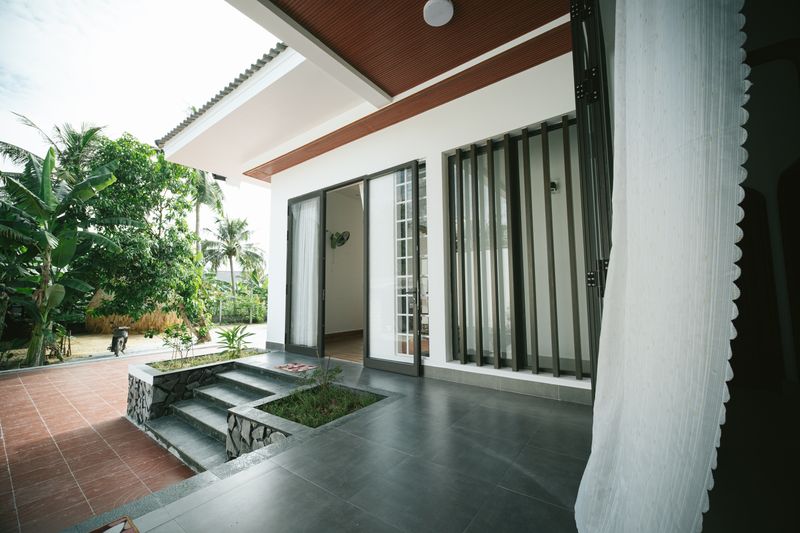
What a Home Security Assessment Actually Covers
A home security assessment should look at far more than a sales package. Here's what a thorough walk-through covers, from the curb and doors to lighting, habits and local rules.
5 min read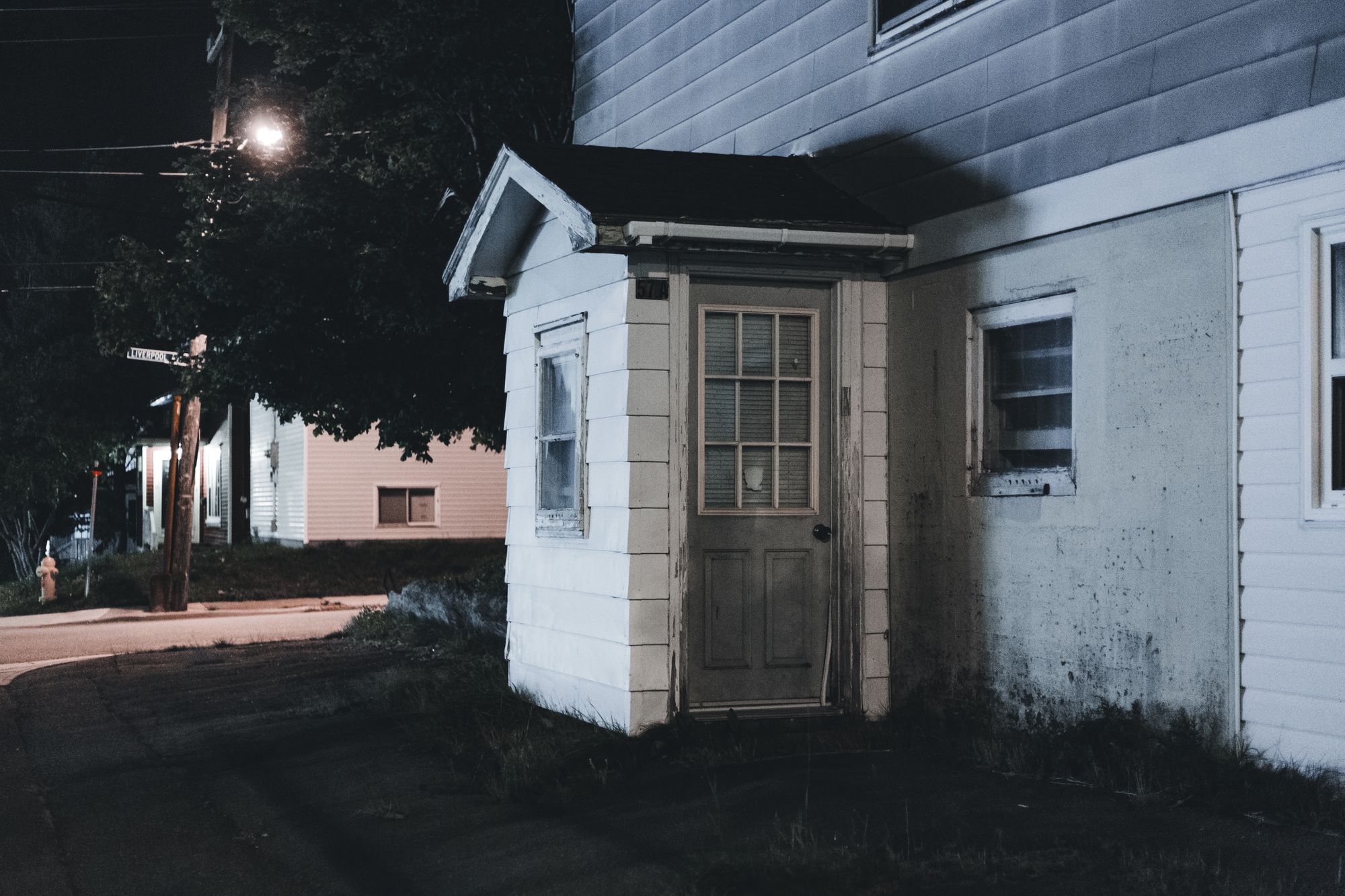
Doors & Entry Points
Good home security starts with the doors, windows and habits you already have. This guide walks through each way into a typical house, what to check at each one, and how to build a plan that fits your home and budget.
Most people picture cameras and sirens when they think about home security, but the dependable gains usually come from simpler things. A solid deadbolt that actually gets thrown, a sliding door that can't be lifted off its track, a garage entry door that stays locked. These aren't exciting upgrades, and that's the point. They work every day without a subscription or an app.
The approach here is to walk your home the way a stranger might, one entry point at a time, and write down what you find. You'll end up with a short list of fixes, sorted by cost and effort. Some take ten minutes with a screwdriver. Others, like a monitored system, deserve more research and a few quotes before you commit.
1Step 1 of 8
Start outside, in daylight, and then repeat the walk after dark. Circle the house slowly and list every door, window, hatch and gate you pass, including the ones you rarely use. Ask simple questions at each spot. Could someone reach this without being seen from the street? Is the lock working, or has it been stiff for years? Does a shrub or fence give cover? Take photos so you can compare later. The night walk often shows different things: dark corners, a porch light that burned out, a side yard that disappears from view.
Basement windows, crawl space access, pet doors and the garage-to-house door are easy to overlook because nobody treats them as a front door.
An entry point in plain view of the sidewalk or a neighbor's window gets more natural watching than a back corner screened by a tall fence or hedge.
2Step 2 of 8
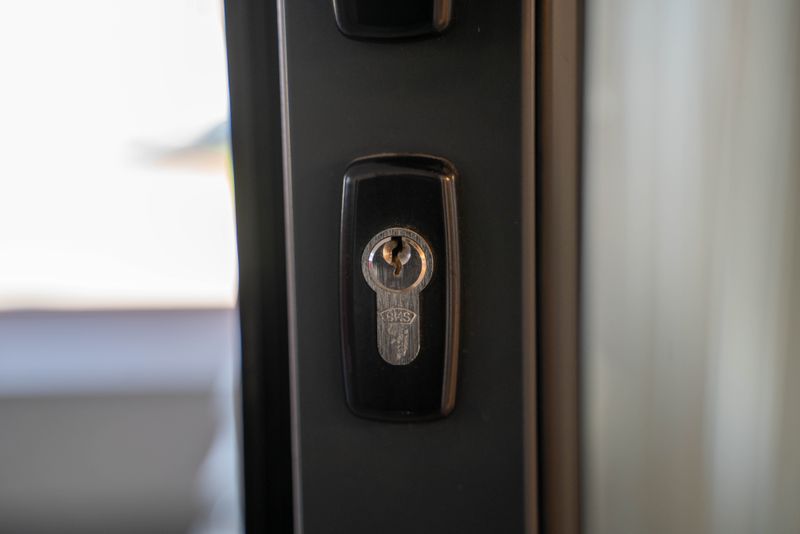
Exterior doors take the most daily wear, so give them a close look first. Check that each one has a deadbolt with a bolt that extends fully into the frame, not just a spring latch in the knob. Open the door and look at the strike plate on the frame. If it is held by short screws that only reach the trim, the door can be much weaker than the lock suggests. Solid wood, fiberglass or metal doors hold up better than hollow-core ones, and a door with a glass panel near the lock deserves extra thought.
Screws long enough to pass through the jamb and bite into the framing behind it add real strength. A hardware store can help you pick the right length.
On doors that swing outward, hinge pins may be exposed. Security pins or set screws keep the door from being lifted free even if the pins are pulled.
A wide-angle viewer or video doorbell shows who is outside before you open the door, which matters more than any lock if you tend to answer every knock.
3Step 3 of 8
Sliding glass doors are convenient and bright, and the latches that come with them are often light-duty. Two issues come up again and again. The first is the latch itself, which can sometimes be forced or jiggled open. The second is the panel, which on some older doors can be lifted out of its track while closed. Both have inexpensive fixes. French doors and other double doors have their own weak spot: the inactive door, which is held only by bolts at the top and bottom.
A cut dowel or a purpose-made security bar laid in the lower track keeps the door from sliding open even if the latch gives way.
Anti-lift blocks or screws set into the upper track, with just enough clearance left to slide, keep the panel from being raised out of its frame.
The fixed half of a French door should have sturdy flush bolts that reach well into the header above and the sill or floor below.
4Step 4 of 8
Ground-floor windows get most of the attention, and rightly so, but don't stop there. A second-story window above a porch roof, next to a sturdy tree or near a stored ladder can be just as reachable. Make sure every window lock actually latches and that the latch pulls the sashes tight. Window locks that were painted over years ago often don't work at all. For windows you like to open for air, a stop or pin that limits the opening to a few inches lets you ventilate without leaving a gap someone could climb through.
Bedroom and basement windows may be required escape routes in a fire. Don't screw them shut, and check local building codes before adding bars or grilles.
Keep ladders in a locked garage or shed, or chain them to something solid, so nobody can borrow one to reach an upper window.
Security film or laminated glass can make a pane slower to break through. It is worth asking about for glass that sits within reach of a door lock.
5Step 5 of 8
Garages hold tools, bikes and often a direct door into the house, so treat them as part of the home, not an outbuilding. Keep the overhead door closed when you aren't in the garage, including when you're working in the backyard. Give the house door inside the garage a deadbolt and use it, just as you would at the front. Keep opener remotes out of cars parked in the driveway, or at least out of sight, and consider a keychain remote instead. If your opener is old, ask whether it uses rolling codes, which change with each use.
On many openers the release cord can be reached from outside through the top of the door. A release shield can reduce that risk while keeping the release usable in an emergency.
Frosted film on garage windows keeps passersby from checking whether a car is parked inside, which is an easy clue about whether anyone is home.
6Step 6 of 8
Shrubs add curb appeal, but tall hedges beside windows and doors can give someone a private spot to work. Keep bushes near windows trimmed below the sill, and prune tree limbs that reach toward the roof or a second-floor window. Thorny plants under ground-floor windows are a traditional, low-cost deterrent. Then look at lighting. Every door should have a working light, and paths around the side of the house benefit from motion lighting. A separate guide on outdoor lighting covers placement, timers and how to avoid bothering the neighbors.
7Step 7 of 8
Hardware only helps when it is used. Many of the everyday gains come from routines: locking doors even when you're home, closing the garage, and not leaving a spare key under the mat, in a fake rock or above the door frame. Keep valuables and the boxes from new purchases out of view from the street. When you travel, hold off on posting photos until you're back. Agree on a household routine for the last person to bed, a quick check of the doors, the garage and the stove. It takes a minute and soon becomes automatic.
A trusted neighbor, a coded lockbox mounted out of sight, or a keypad lock removes the need for a hidden key outside the house.
Know who has a key or a code to your home, such as family, a dog walker or a cleaner, and update the list when things change.
8Step 8 of 8
A security system can add door and window sensors, motion detectors, a siren and cameras, with either self-monitoring through an app or professional monitoring that contacts you and, depending on the setup, emergency services. Neither option replaces good locks. Think about what you want the system to do: make noise, notify you, record video, or all three. Ask about contract length, cancellation terms and equipment ownership before you sign. Many cities and counties require alarm registration or a permit and may charge fees for repeated false dispatches, so check your local rules.
You get phone notifications and decide what to do. It usually costs less, but it only works when you see the notification and can respond.
A monitoring center watches for signals and follows the steps you agree on. Read the terms carefully, including how the system behaves if the power or internet goes down.
If you think someone is in your home or trying to get in, leave if you can and call 911. Don't go looking around on your own.
Tick boxes as you go. Nothing leaves this page.
Start with the doors you use every day. Make sure each has a deadbolt that fully extends, then replace short strike plate screws with longer ones that reach the framing. Add a bar or dowel to sliding door tracks and fix any window latch that doesn't close. Those steps cost little, need basic tools, and help whether or not you ever add a system.
It depends on what you want from it. Locks slow someone down, while a system can make noise, notify you or a monitoring center, and record what happened. Some systems also include smoke or water leak sensors. Compare total costs, contract terms and whether you would actually respond to notifications. Some insurers may offer a discount for monitored systems, so ask yours.
It's wiser not to. The usual hiding places, like under the mat, above the door frame or inside a fake rock, are the first spots anyone would check. Give a spare to a trusted neighbor or relative, use a coded lockbox kept out of view, or switch to a keypad lock so you can share a code instead of a physical key.
Don't go inside. Move to a safe spot, such as your car or a neighbor's home, and call 911. Someone could still be inside, and leaving things untouched helps the officers who respond. Once police say it's clear, take photos of what you find before you clean up, then contact your insurer about next steps.
Home security comes together in layers: sturdy doors and locks, windows that latch, a closed garage, sensible lighting and routines everyone in the house follows. You don't need to do it all this weekend. Pick two or three items from the checklist, finish them, and come back to the rest. For more reading, SecureYrHome keeps a library of plain-English homeowner guides covering locks, cameras, lighting and more. They are general education, not professional advice, so for questions about your specific home, ask a qualified local installer or locksmith to take a look in person.
 Doors & Entry PointsDoor Locks & Smart LocksA deadbolt can only hold as well as the door, frame and screws around it.Read the guide
 Doors & Entry PointsPackage DeliveriesMost package problems come down to timing and placement: a box sits in plain view for hours, or arrives when nobody's around.Read the guide
 Cameras & LightingSecurity CamerasCameras can show you who is at the door, record what happened in the driveway and let you check in while you're away.Read the guide
A home security assessment should look at far more than a sales package. Here's what a thorough walk-through covers, from the curb and doors to lighting, habits and local rules.
5 min readWired and wireless security systems each fit different homes. Learn how they differ, where each makes sense, when a hybrid setup is practical and what to ask before choosing.
5 min readProfessional monitoring puts a trained operator between a sensor and a response. Self-monitoring puts that decision on you. Here's how each works, who each suits and what to ask.
5 min read
Property and homeowner records, list building, routes and outreach tools for security dealers, locksmiths, installers and contractors.